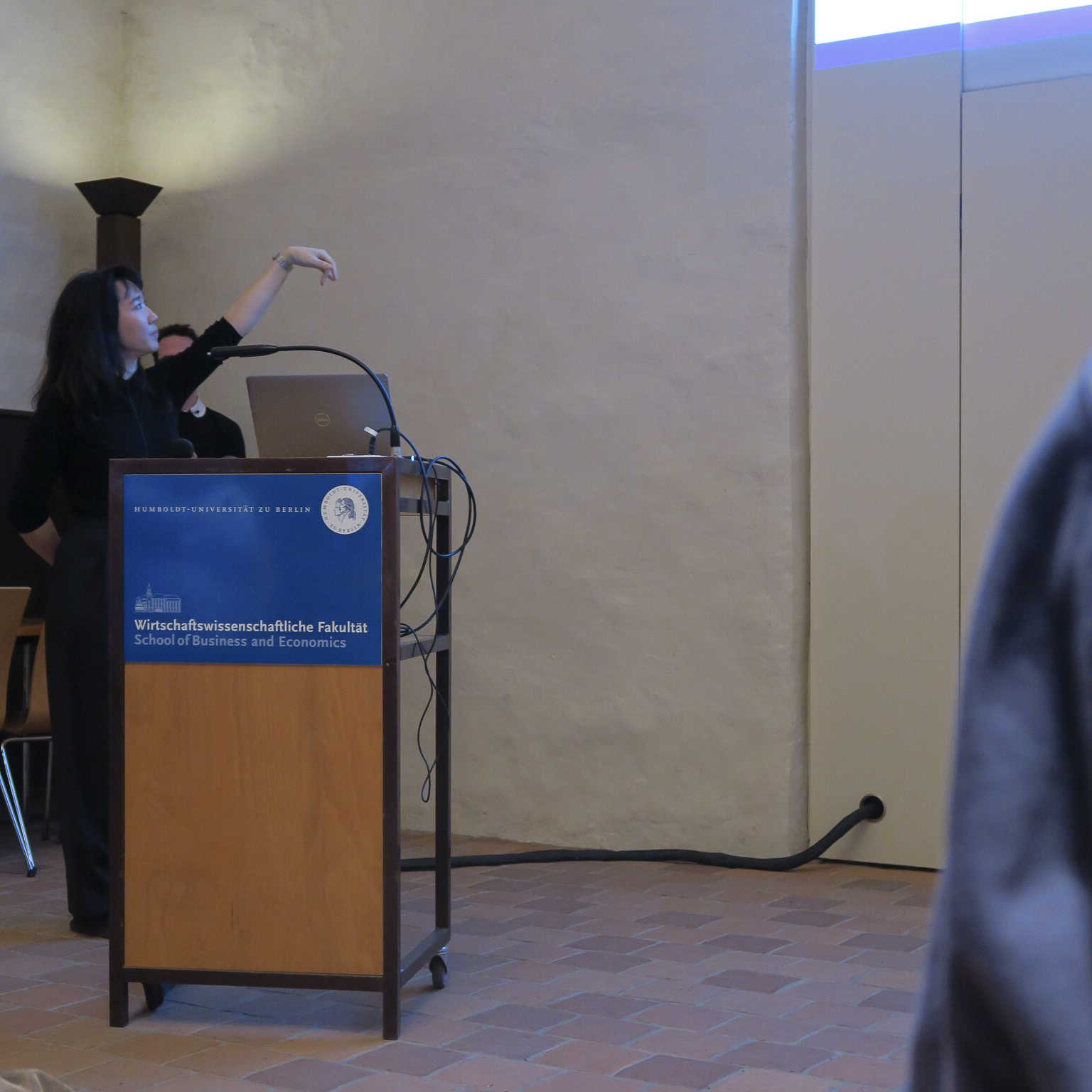
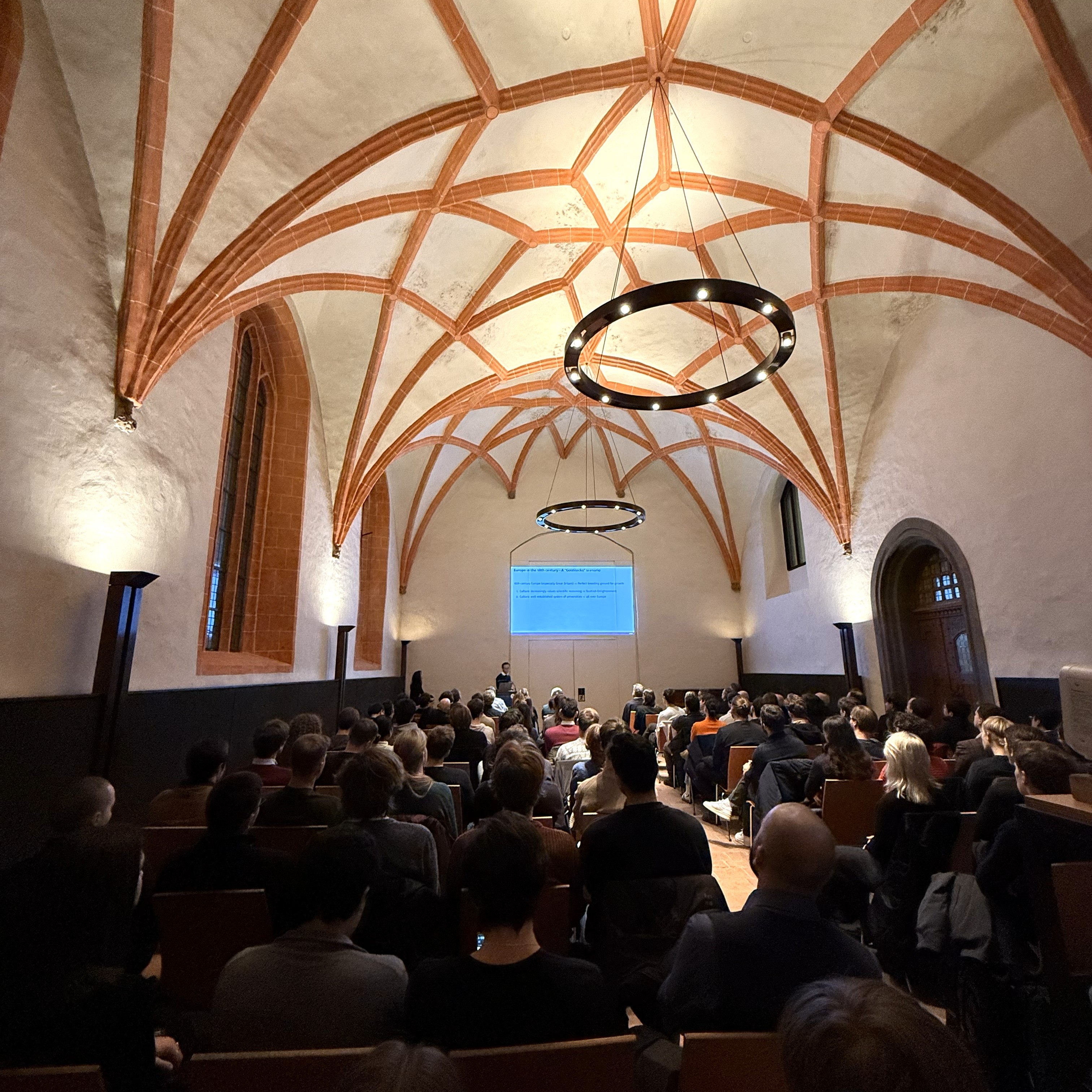
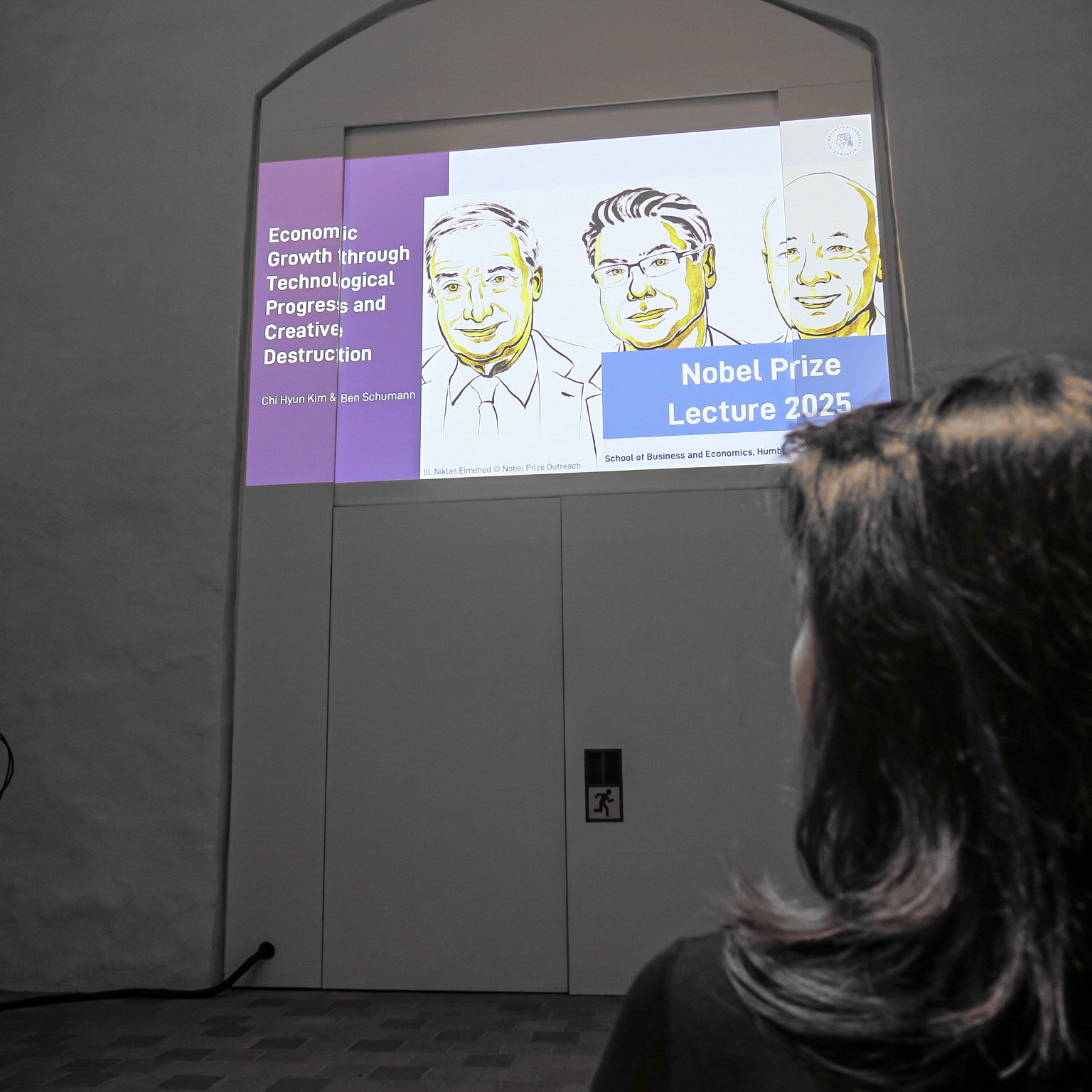
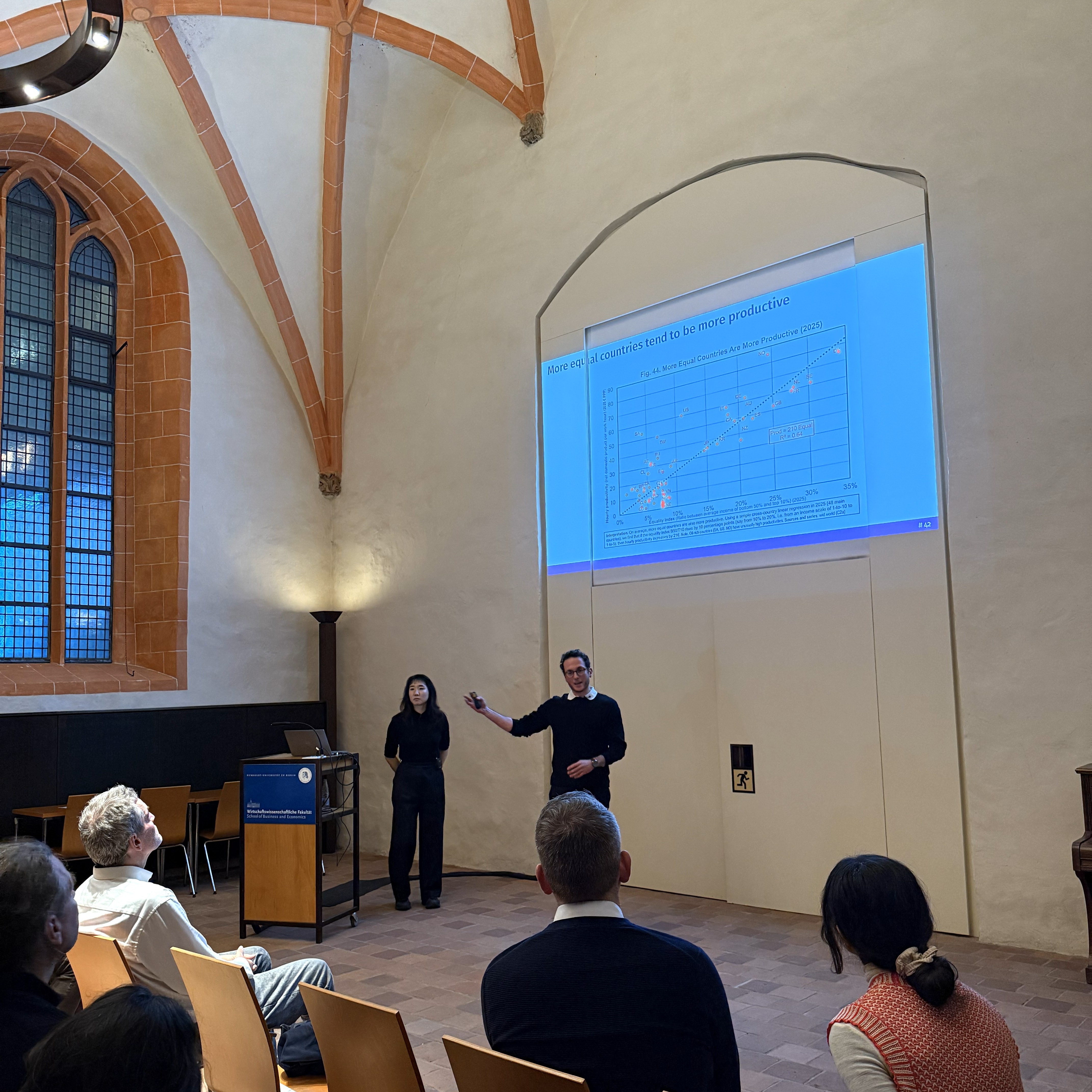
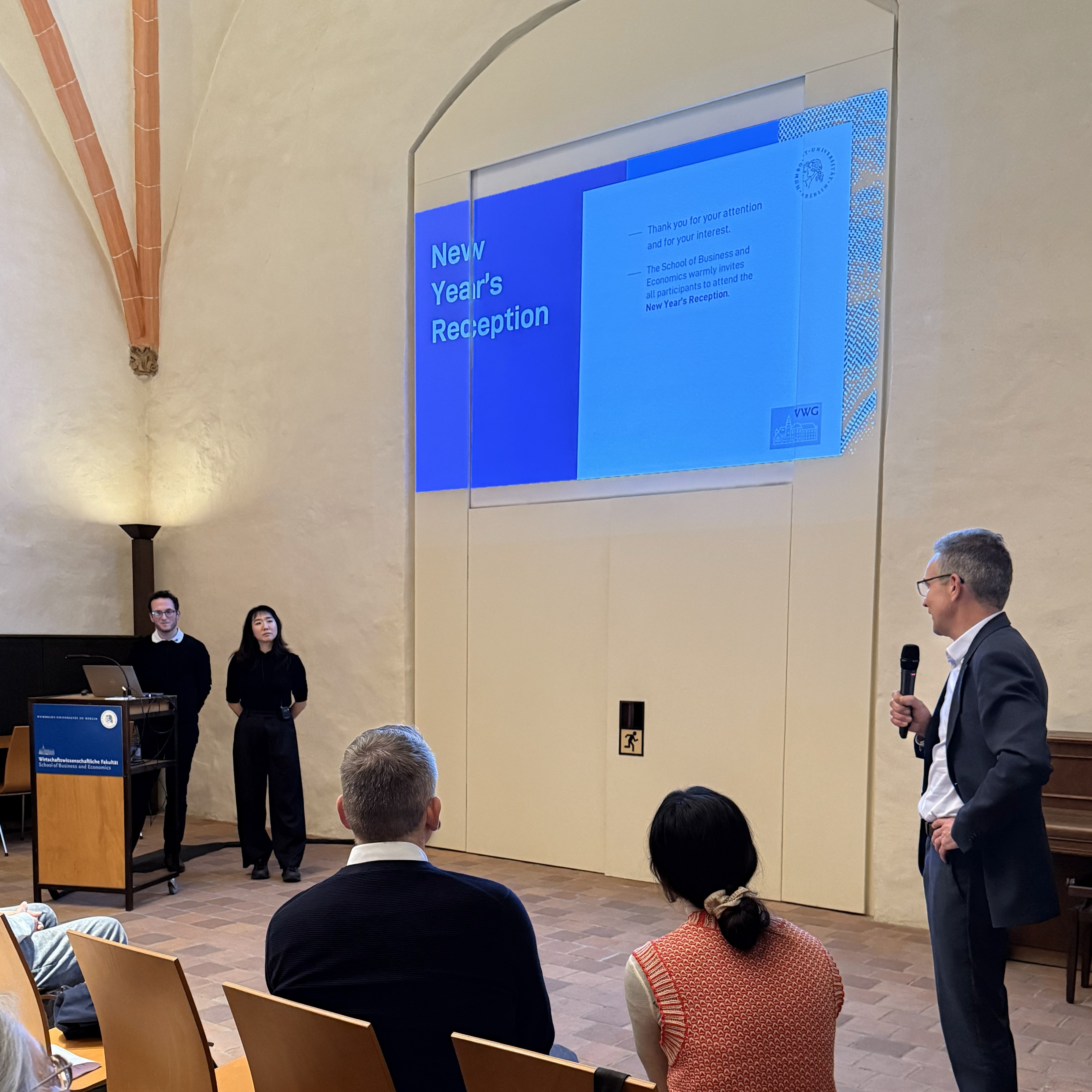
On January 14, 2026, the Heilig-Geist-Kapelle at Humboldt-Universität zu Berlin once again provided a fitting setting for an evening of intellectual exchange and reflection. The Nobel Prize Lecture 2025 was followed by the School of Business and Economics’ New Year’s Reception, bringing together students, researchers, and guests from across disciplines to engage with some of the most fundamental questions in economics: how societies grow, innovate, and sustain prosperity over time.
Understanding Innovation-Driven Growth
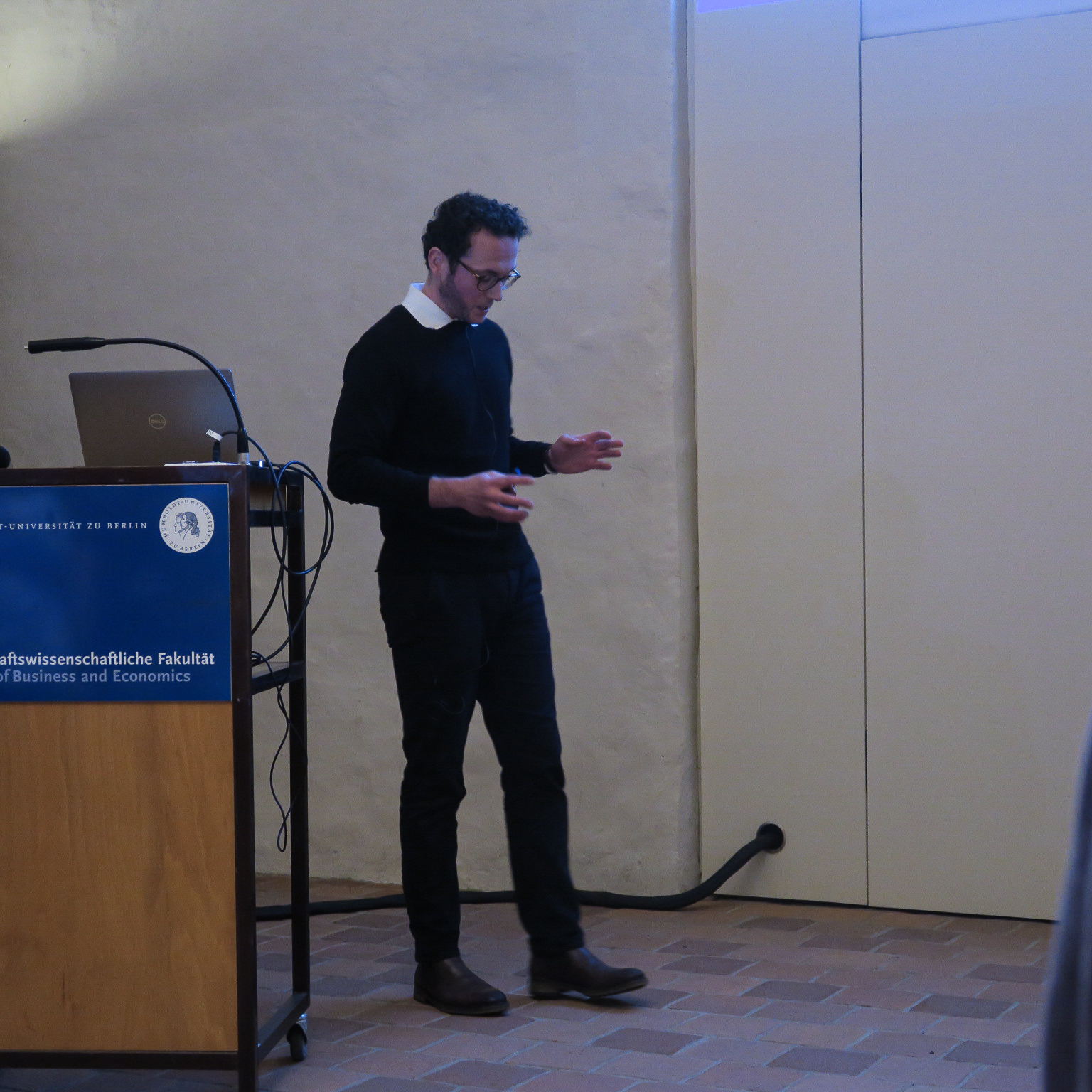
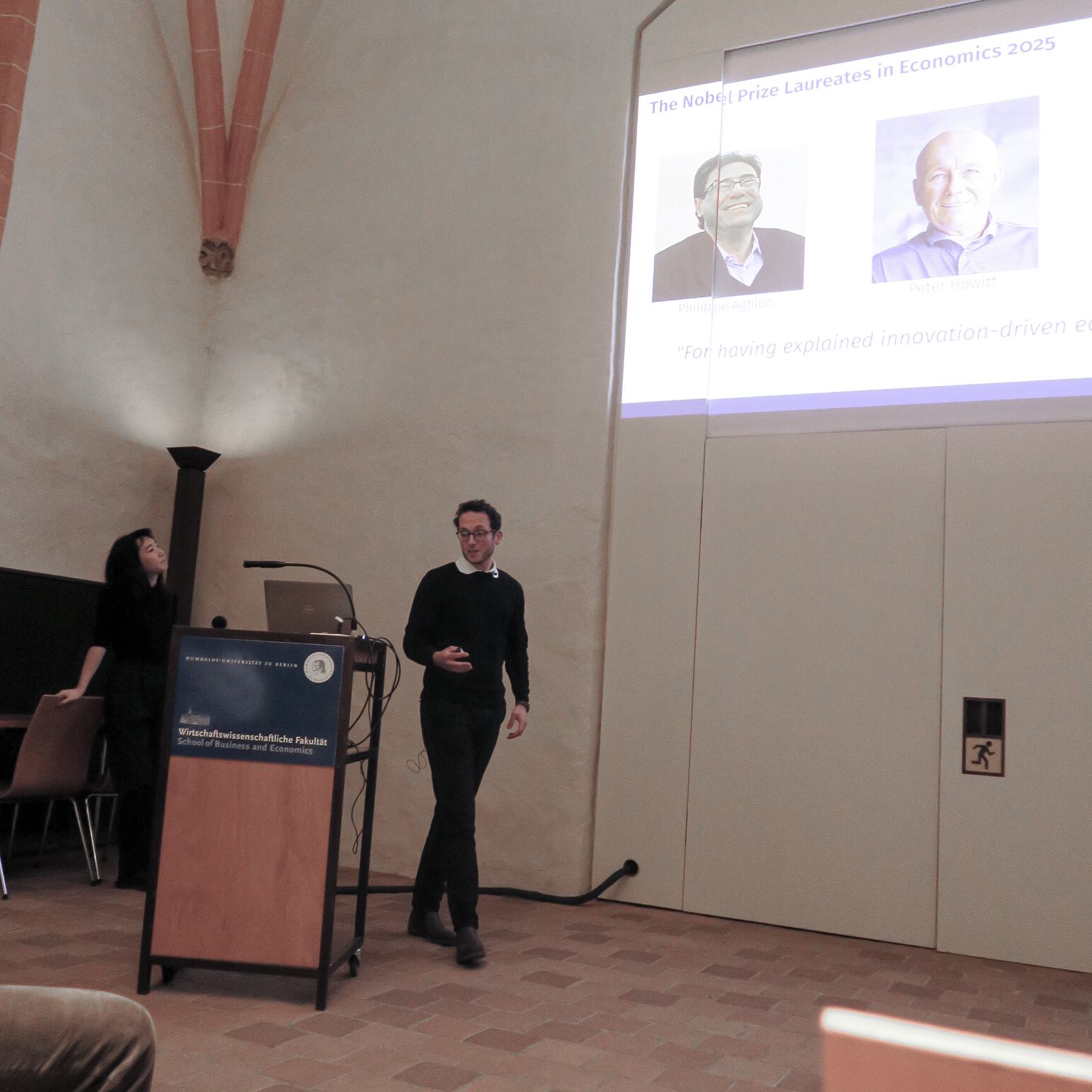
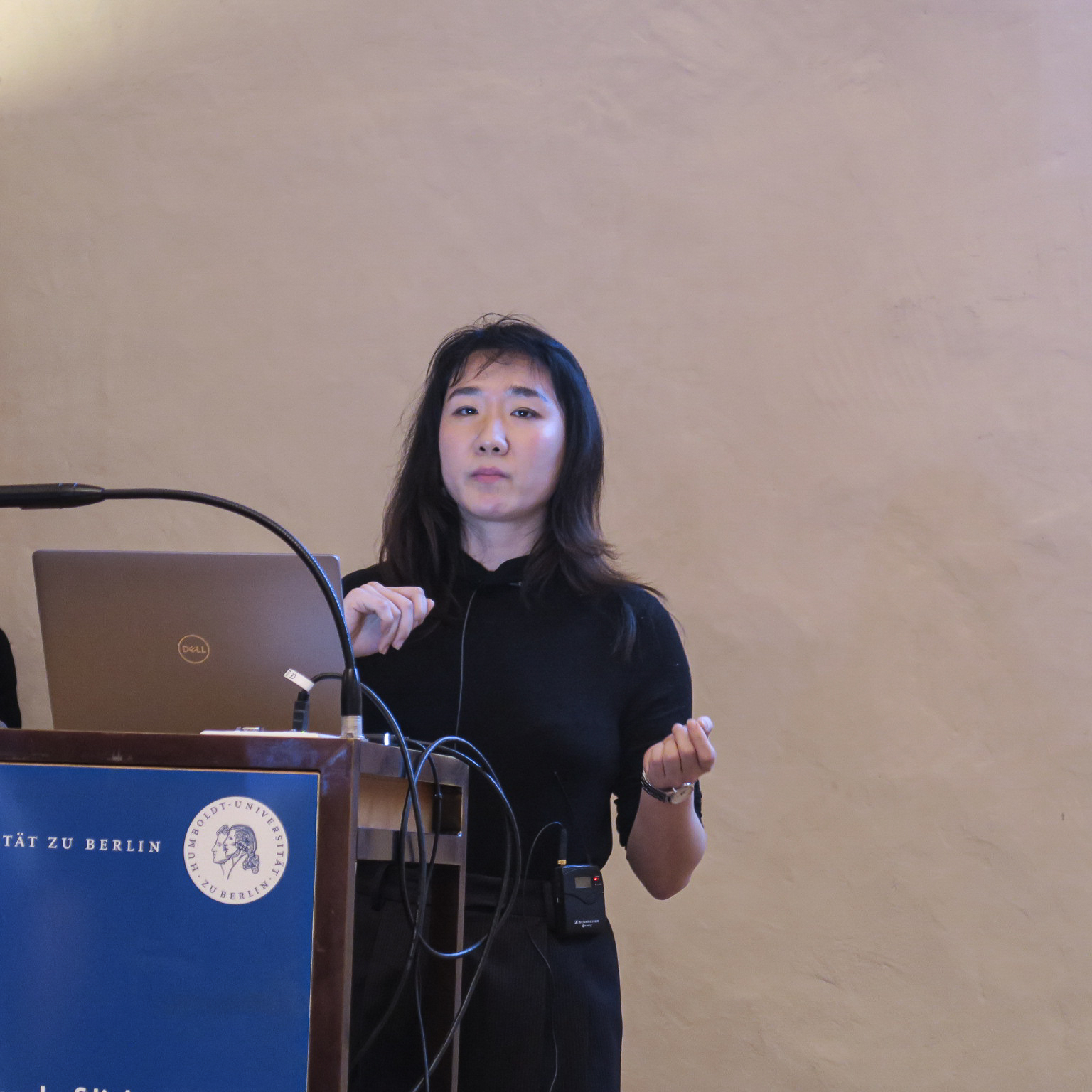
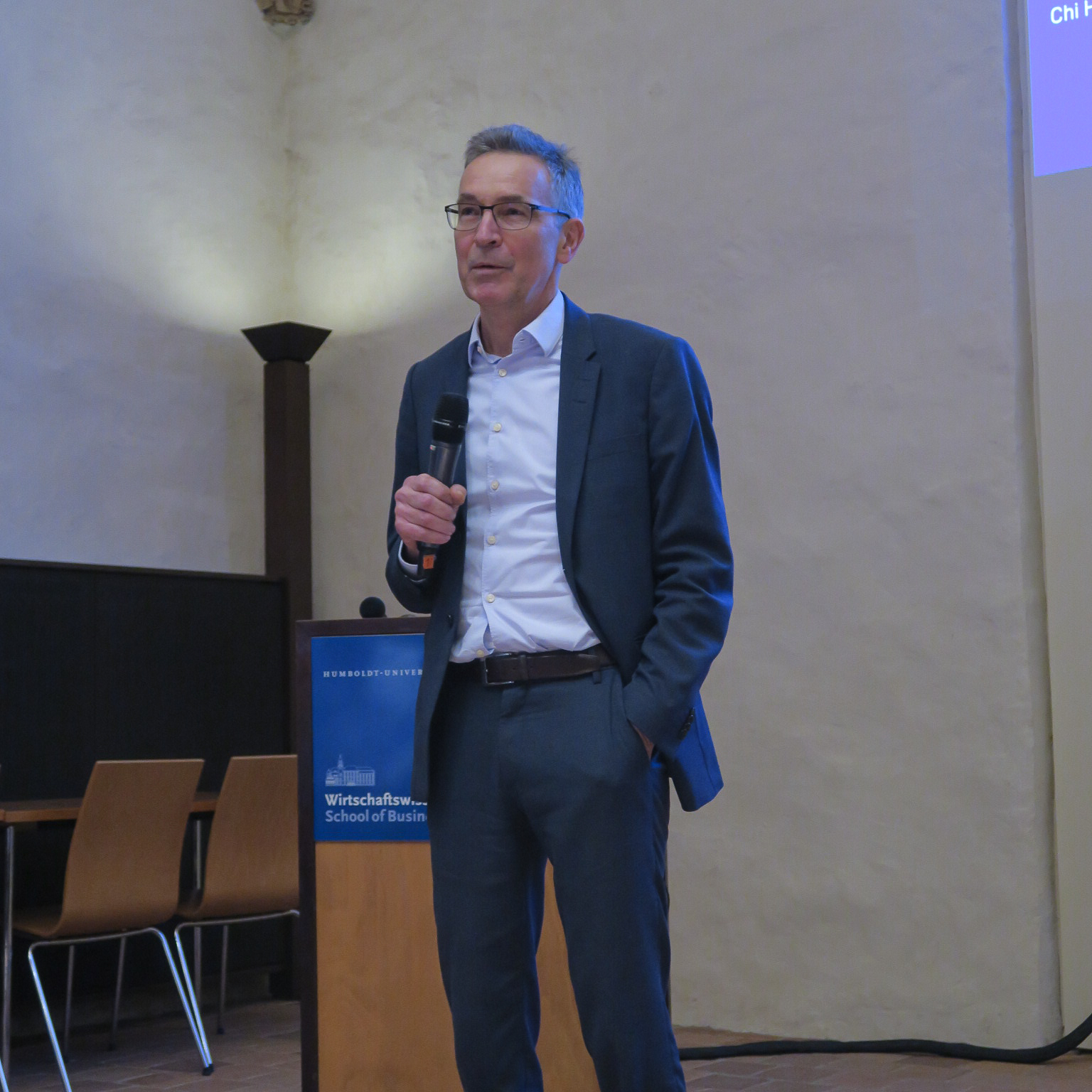
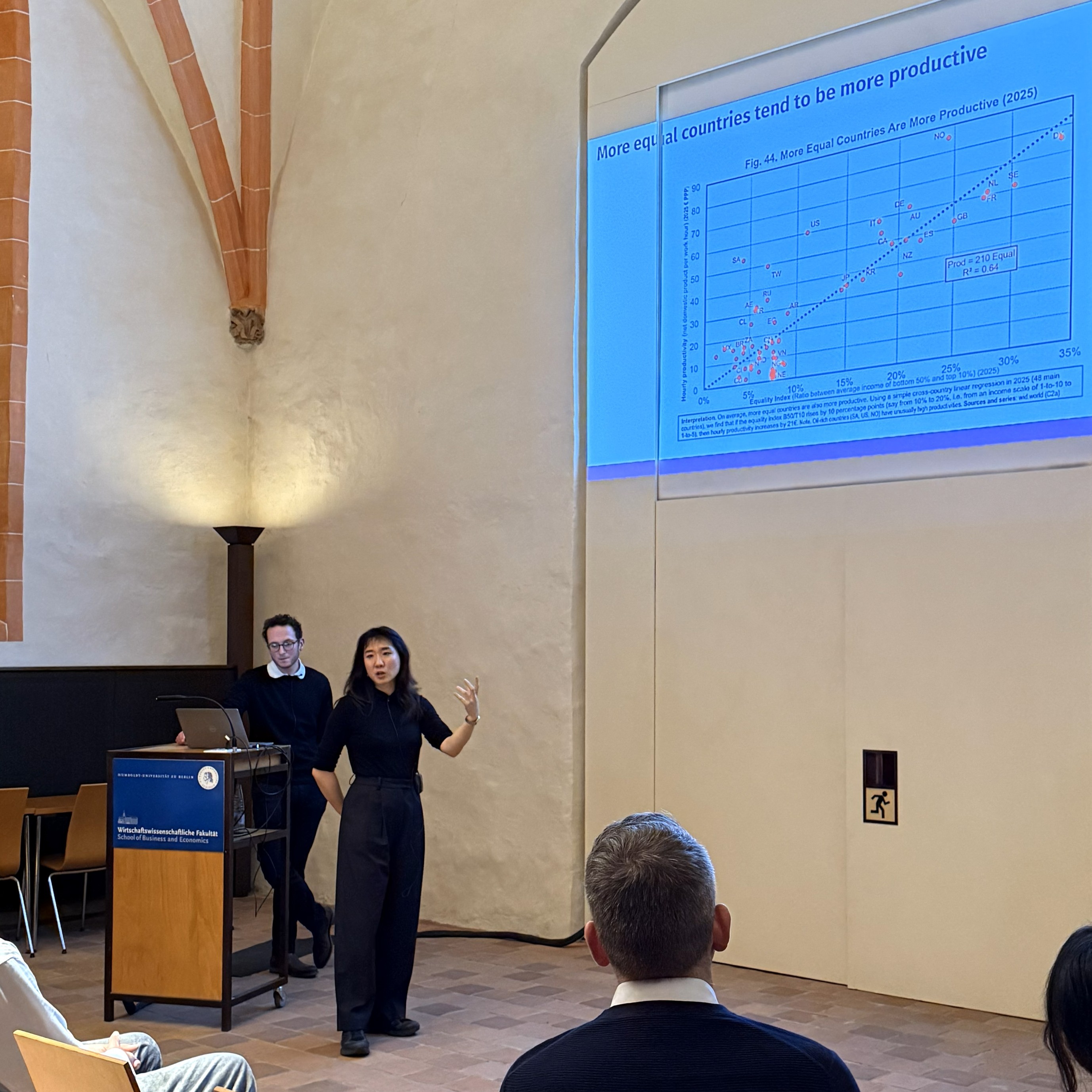
After welcoming remarks by the Dean of the School of Business and Economics, Prof. Dr. Daniel Klapper, the central lecture was delivered by Chi Hyun Kim and Ben Schumann. Their presentation, entitled “Economic Growth through Technological Progress and Creative Destruction,” unpacked the key contributions of the 2025 Nobel Laureates in Economic Sciences: Joel Mokyr, Philippe Aghion, and Peter Howitt. The speakers guided the audience through the intellectual logic behind the prize, explaining how innovation – rather than capital or labor alone – has become the decisive driver of long-run economic growth.
The lecture began with Joel Mokyr’s historical perspective on technological progress. Mokyr’s work addresses a long-standing puzzle: why productivity stagnated for centuries despite frequent inventions, and why it suddenly accelerated during the Industrial Revolution. The key distinction, as explained by Kim and Schumann, lies between “prescriptive knowledge” (knowing how to do things) and “propositional knowledge” (understanding why things work). Only when scientific inquiry and practical know-how began to reinforce each other – supported by open intellectual exchange, universities, and political institutions that protected inquiry – did sustained growth become possible.
From Creative Destruction to Policy Design
Building on this historical foundation, the lecture turned to the theory of creative destruction developed by Philippe Aghion and Peter Howitt. Drawing on Joseph Schumpeter’s original insight, their framework formalizes how innovation emerges from competition between firms: new technologies replace old ones, granting temporary monopoly profits to innovators while continuously reshaping markets. This process explains both why growth persists and why it is inherently disruptive.
Crucially, the speakers emphasized that markets alone do not automatically generate socially optimal levels of innovation. Innovation creates positive spillovers – knowledge that benefits future inventors – but also negative effects, such as the displacement of existing firms. As a result, economic policy must carefully balance competition policy, patent design, and targeted research support. The lecture made clear that more innovation is not always better by default; its design and institutional context matter at least as much as its scale.
Looking Ahead: Growth, Technology, and Inequality
In its final part, the lecture addressed the future of growth in the age of artificial intelligence. While AI holds the potential to raise productivity, its effects are uncertain and closely intertwined with questions of inequality. Technological progress may concentrate profits and widen income gaps, which in turn can provoke political resistance and slow adoption. As Kim and Schumann stressed, the challenge ahead is not only to foster innovation, but to ensure that its benefits are broadly shared – so that technological progress translates into durable social welfare gains.
An Evening of Exchange and Renewal
The lecture was followed by the New Year’s Reception of the School of Business and Economics, offering space for informal discussion and cross-disciplinary exchange. Conversations continued well into the evening, reflecting the School’s commitment to connecting rigorous economic research with contemporary societal debates.
The Nobel Prize Lecture 2025 highlighted a central message: economic growth is neither automatic nor guaranteed. It depends on institutions that encourage open inquiry, reward innovation, and manage its consequences. As the evening made clear, sustaining these conditions remains one of the defining tasks for economies facing rapid technological change.
Slides of the Nobel Prize Lecture 2025